Performance
Takeoff
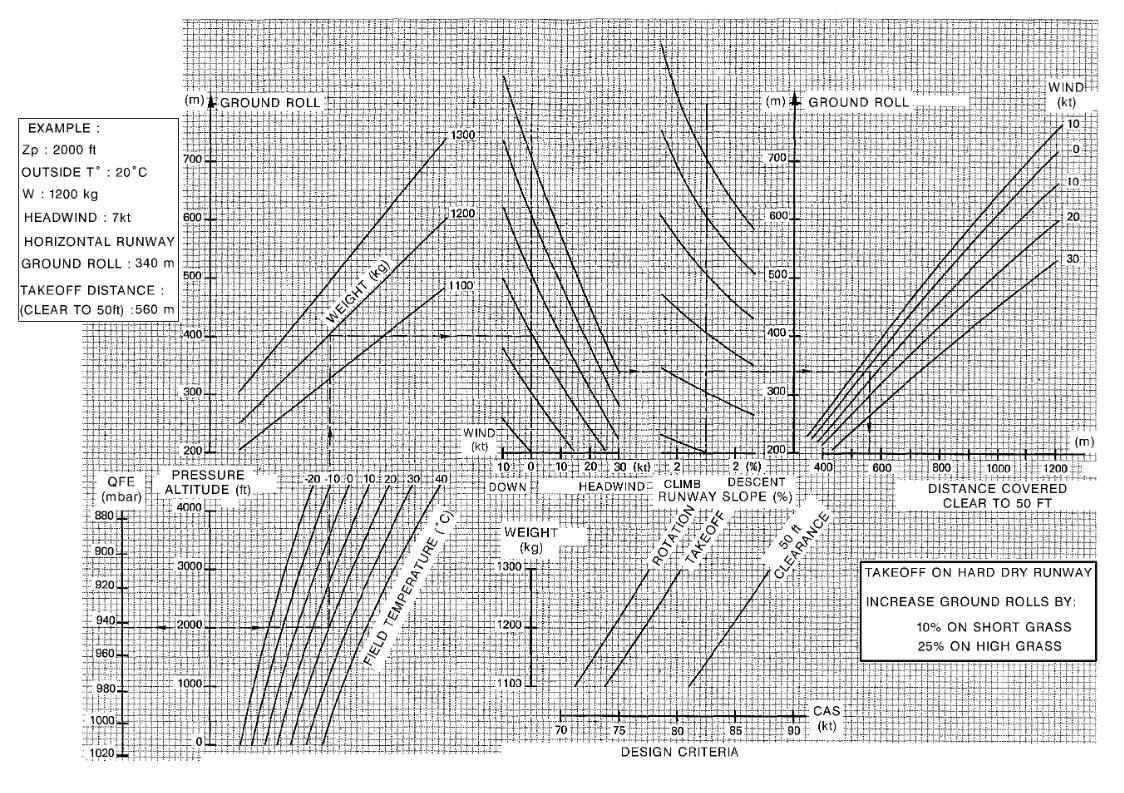
Takeoff is performed full throttle, full low pitch, full rich, in flaps configuration 15°.
Following illustration gives:
-
Rolling distance.
-
Takeoff distance to 15m obstacle clearance.
The used procedure is the following:
-
Full throttle, brakes applied.
-
Rotation and obstacle clearance to speeds indicated on graph shown on the same figure, depending on weights.
-
Starting of landing gear retraction as soon as the vertical speed indicator gives a clearly positive value.
Climb
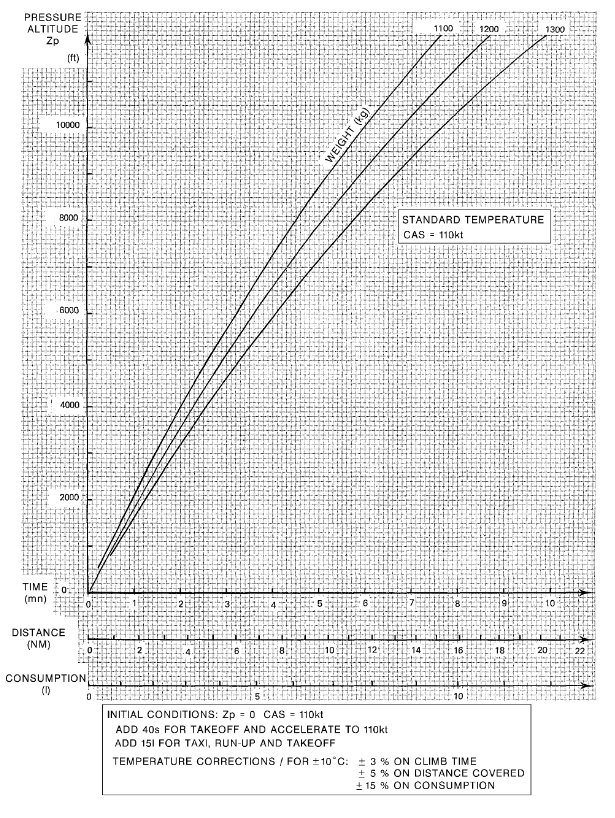
Climbs are performed full throttle, full low pitch, with nil slope and side-slip, for CAS = 110 kts and in clean configuration.
Following illustration gives:
-
Time, distance and consumption in standard atmosphere.
-
The possibility to correct these results depending on deviation from standard air temperature.
Cruise
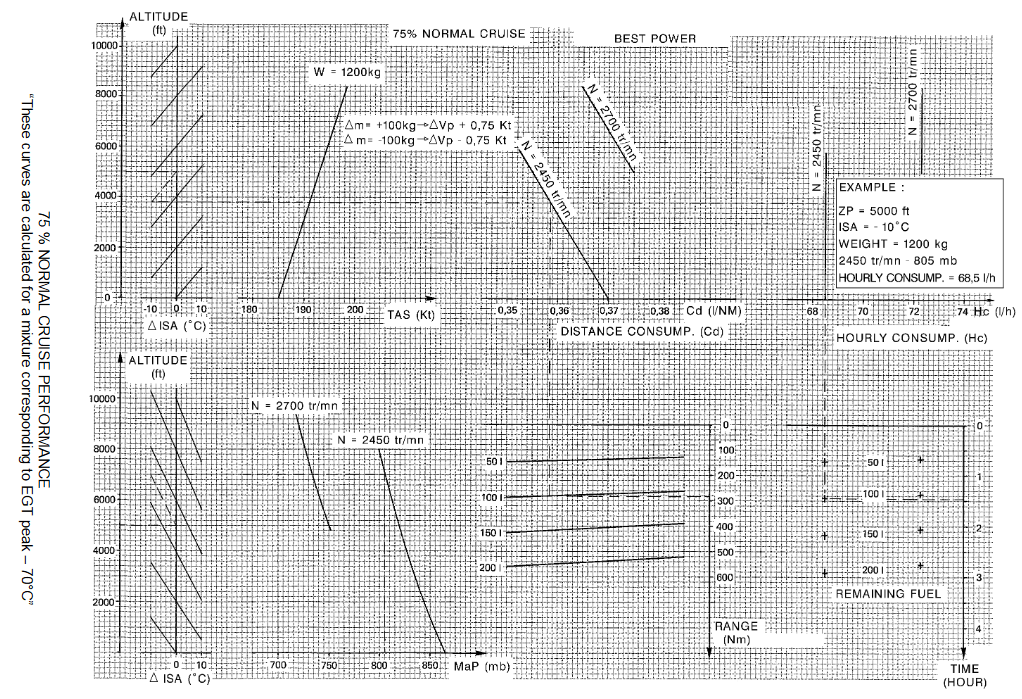
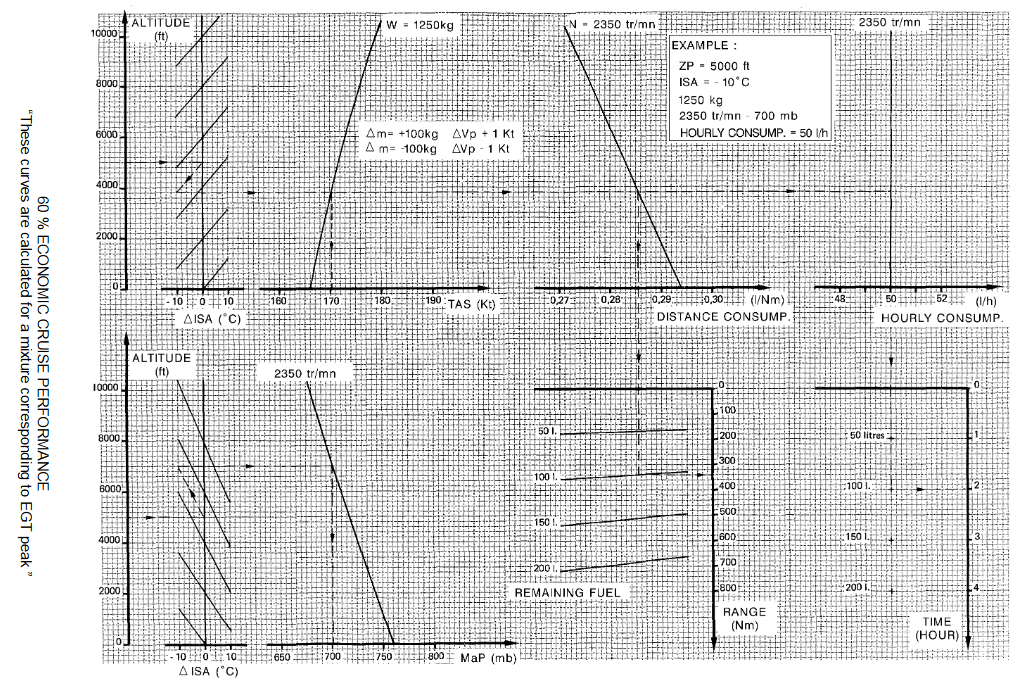
Cruise performance (speed, consumption, distance, time) are given for two associated settings of power and mixture:
-
Power 75% “normal cruise” (2450 tr/min, adapted Pa), mixture best power (EGT peak – 70 °C) as done by automatic mixture control already.
-
Power 60% “economic cruise” (2350 tr/min, adapted Pa), mixture manually set to EGT peak.
In cruise, the pilot may set the mixture to improve his aircraft distance/consumption if the following conditions are met:
-
Displayed power < 75%.
-
Cruise stabilized and constant altitude.
With constant RPM and manifold pressure, the pilot weakens the mixture with mixture lever. EGT indicator gives an exhaust gas temperature directly related to inlet mixture. Please note that there is a great inertia between the lever movement and the EGT temperature modification.
Landing
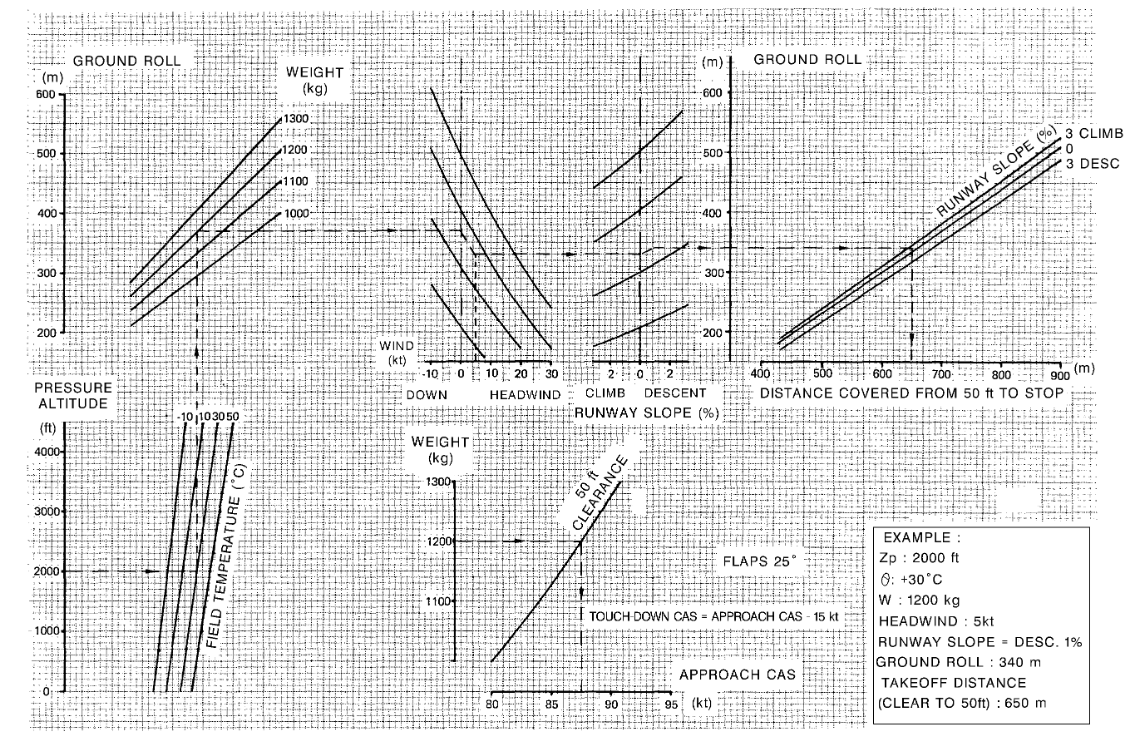
Following illustration gives:
-
Rolling distance.
-
Landing distance from 15m obstacle clearance to aircraft stop.
These performances are established on dry, hard surface runway, with approach and touch-down impact speeds, depending on aircraft weight, given by the graph on this same figure.