Introduction
Rafale overview
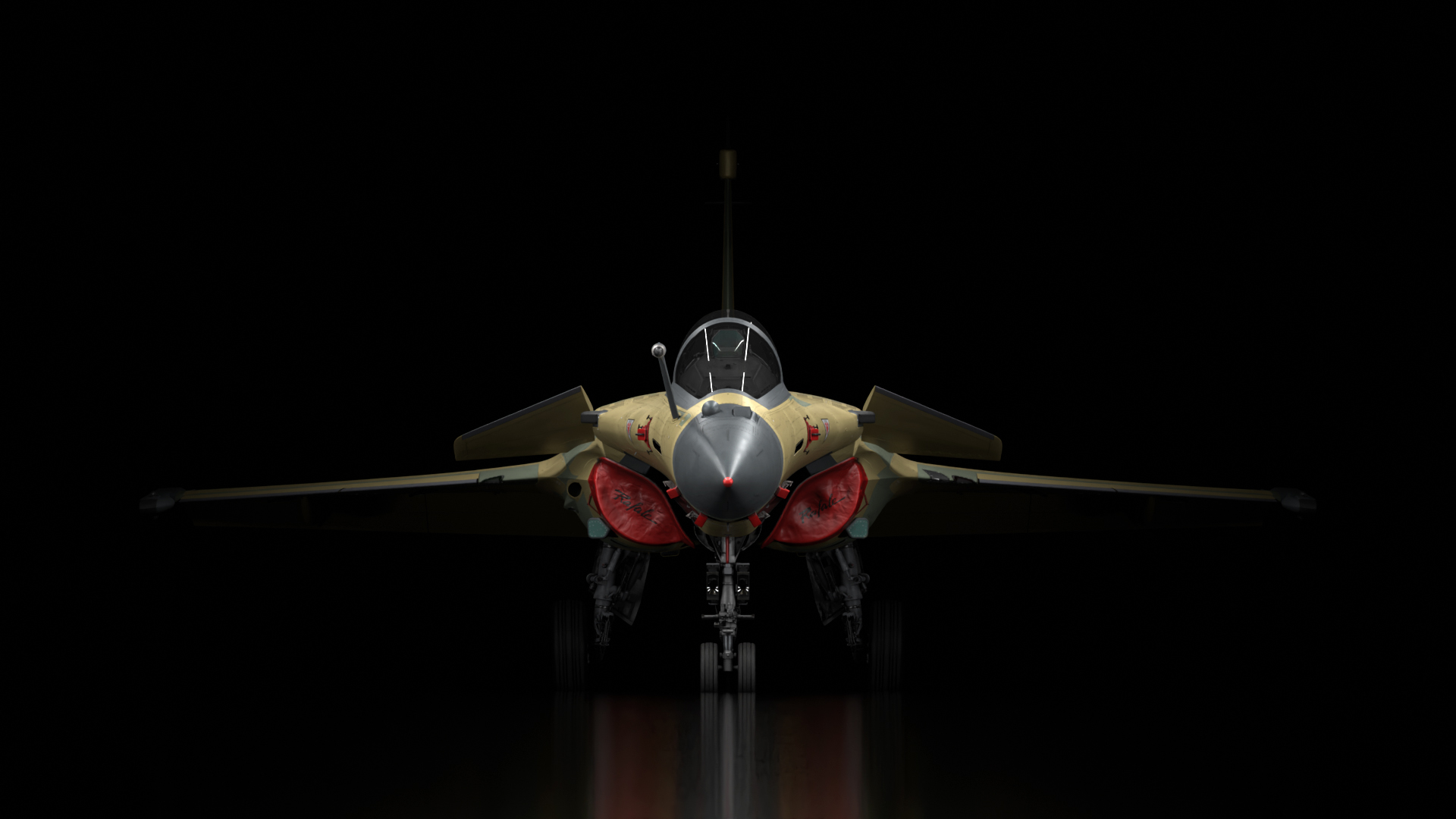
The Dassault Rafale is a French twin-engine, canard-delta combat aircraft developed for both the French Air Force and the French Navy.
From the beginning, the aim was to replace seven different aircraft types with a single family able to cover the full range of combat aviation missions.
The technology demonstrator, then known as ACX or Rafale A, made its maiden flight on 4 July 1986. The full Rafale program was officially launched in 1988.
The aircraft entered operational service with the French Navy in 2004 and with the French Air Force in 2006. It has since become the backbone of French tactical air power and is expected to remain in service well beyond 2060.
Combat experience in Afghanistan, Libya, Mali, Iraq and Syria confirmed the maturity of the design and the value of its broad mission set.
Omnirole philosophy
The Rafale is often described as an omnirole fighter rather than simply multi-role.
The distinction matters. The aircraft was designed not only to carry out different types of missions, but also to move from one to another with little reconfiguration and, when required, during the same mission.
In practical terms, this idea rests on several qualities:
-
Versatility, by allowing one aircraft type to cover air-to-air, air-to-ground, reconnaissance, maritime strike, nuclear deterrence, and buddy-buddy refueling. -
Interoperability, by operating within joint and coalition environments. -
Flexibility, by allowing crews to adapt quickly to changing tactical demands. -
Survivability, through sensor fusion, electronic warfare, reduced signatures, and a flight-control system suited to demanding low-level and high-threat environments.
This is one of the defining features of the Rafale and helps explain much of its avionics, sensor, and cockpit logic.
Variants
The Rafale exists in three main operational variants:
-
Rafale C: single-seat land-based version for the French Air Force and export users. -
Rafale B: two-seat land-based version, fully combat-capable and also used for conversion and advanced training. -
Rafale M: single-seat carrier-capable naval version.
Despite those differences, the three variants retain a very high level of airframe, systems, and mission-equipment commonality.
In service, the pilot still finds the same overall design philosophy across all three variants.
Standards
Rafale capability has evolved through successive standards rather than through a single fixed configuration.
-
F1was the initial operational naval standard and focused on air-to-air missions. -
F2, introduced in 2006, was the first true omnirole standard, adding a credible air-to-ground capability on top of the original air-to-air core. -
F3marked the point at which the Rafale gained the full mission set expected by the French armed forces, including reconnaissance, maritime strike, and the French nuclear mission.F3-Rlater expanded that baseline further with important sensor and weapon improvements and became the reference standard before the transition toF4. -
F4is the current major evolution family. Its first increment,F4.1, was qualified by the DGA on 13 March 2023 and adopted by the French Air and Space Force in August 2023. It moves the aircraft further toward collaborative combat, improved connectivity, and wider system and weapon evolution. Further F4 increments continue in the same direction. -
F5is the next major step and is currently being prepared for the 2030 timeframe. It is presented as a deeper capability leap, with stronger system integration, new sensor and electronic-warfare developments, and compatibility with future French strategic requirements.
Developer notes
We are honored to have been chosen as the developer of the first officially licensed Rafale ever released for a public flight simulator, in collaboration with Jet Fighter Experience.
This initial release features the Rafale C in its F3-R standard. Bringing such an aircraft to Microsoft Flight Simulator has been both a privilege and a challenge that we embraced with great enthusiasm.
The development of this aircraft has spanned nearly two years. Throughout this journey, our objective was simple: to push beyond our own standards and deliver an add-on that stands among the finest military aircraft available on Microsoft Flight Simulator. Every aspect of the project has received an exceptional level of attention, from the flight model and systems simulation to the visual details and overall user experience.
To achieve this level of fidelity, we continuously explored and stretched the capabilities of Microsoft Flight Simulator 2024. Many features of this add-on required us to work at the very edge of what the platform currently allows, developing new technologies and solutions to reproduce systems and behaviors that were never originally intended for the simulator.
We sincerely hope that our community will enjoy flying this aircraft as much as we enjoyed creating it. Your enthusiasm, feedback, and continued support have been a constant source of motivation throughout the development process.
Many thanks to Fly And Fight and to the pilots who helped us developing this aircraft.
This release is not the end of the journey. The Rafale is a living product that will continue to evolve through regular updates, improvements, refinements, and new features as we move forward.
Thank you for your trust and support.


Disclaimer
Official Licensed Product - DASSAULT Aviation.
Developed by AzurPoly in cooperation with JFEXP.
This product is intended exclusively for entertainment and flight simulation purposes.
While every effort has been made to reproduce the aircraft systems, avionics, flight model, and operational environment with a high level of fidelity, this add-on is not a certified training device and does not accurately represent all aspects of the real aircraft.
The information, procedures, performance data, navigation data, maps, checklists, and system behaviours provided with this product may be incomplete, simplified, inaccurate, or intentionally modified to accommodate the Microsoft Flight Simulator environment.
AzurPoly shall not be held liable for any direct or indirect damage, loss, or consequence resulting from the use, misuse, or interpretation of this product or any information contained therein.
Intellectual property
Rafale is a trademark of DASSAULT Aviation.
Microsoft Flight Simulator is a trademark of Microsoft Corporation.
AzurPoly-created content remains the property of AzurPoly. Third-party trademarks and licensed materials remain the property of their respective owners.
The accompanying documentation is also protected by copyright and other applicable intellectual property laws.
No part of this product or its documentation may be copied, reproduced, distributed, transmitted, published, modified, reverse-engineered, shared, or made available to any third party, in whole or in part, by any means, without the prior written authorization of AzurPoly.
Unauthorized use, reproduction, or distribution of this product or its documentation may result in civil and/or criminal penalties under applicable laws.
The military CAM map (France) integrated in the avionics is courtesy of DIRCAM (Direction de la circulation aérienne militaire) and is used with authorization. This data is provided for simulation purposes only and must not be used for real-world navigation, flight planning, operational decision-making, or any aeronautical activity.