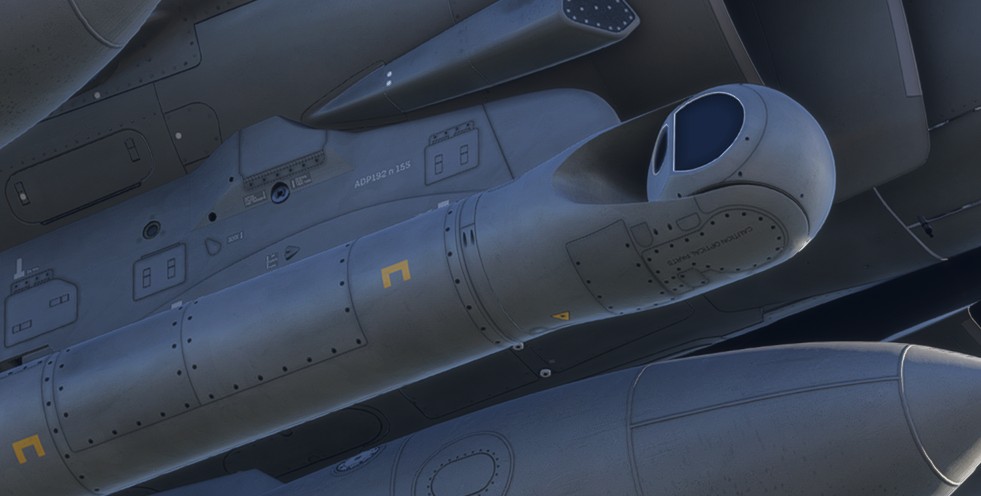
Sensors & Reconnaissance
The radar and sensor systems described on this page should not be considered representative of the real aircraft or its capabilities. These systems are highly simplified to operate within the MSFS environment, and the figures provided below are specific to this add-on. They are not based on real-world performance data.
Radar
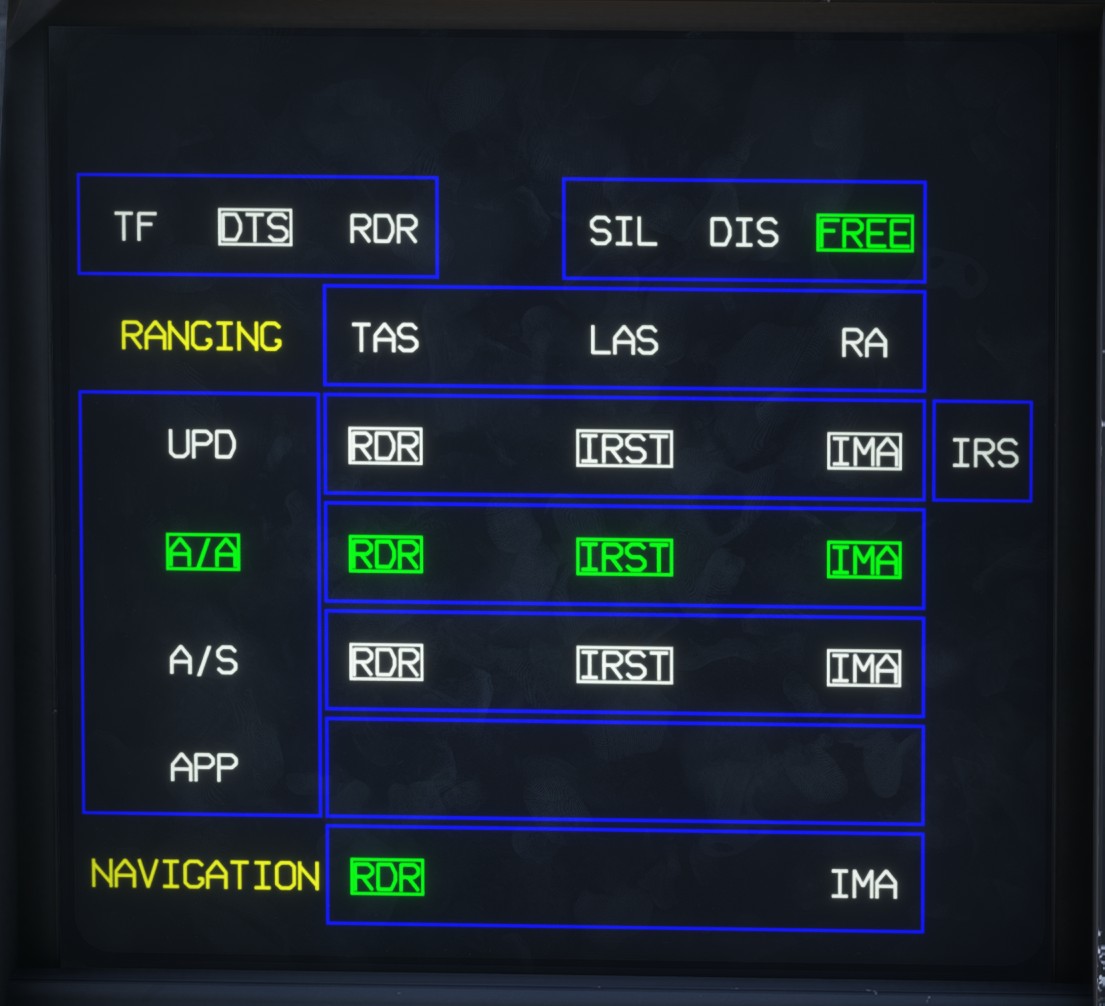
To use the radar, ensure that it is enabled on the LD SYS page for the currently active primary mode.
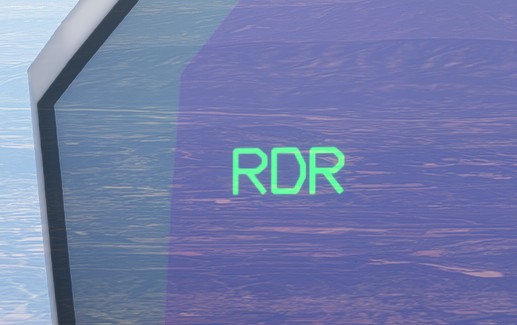
A RDR indication is displayed on the HUD while the radar is active.
The radar is automatically disabled while the aircraft is on the ground.
Our simulated radar has the following characteristics:
- Maximum detection range of approximately 150 km / 80 nm.
- Maximum horizontal scan angle (azimuth) of 70 degrees.
- Maximum vertical scan angle (elevation) of 60 degrees.
The radar is primarily used to detect other aircraft in the simulator, including both AI-controlled and multiplayer traffic.
Detected aircraft can be displayed on the center display in SURV surveillance mode.
Each detected aircraft is represented by a yellow symbol comprising a square and a velocity vector pointing in its direction of travel. The length of the vector varies according to the aircraft's speed, allowing it to be compared with your own speed. The aircraft's estimated altitude is also displayed.
The magenta outline indicates the limits of the simulated radar scan volume.
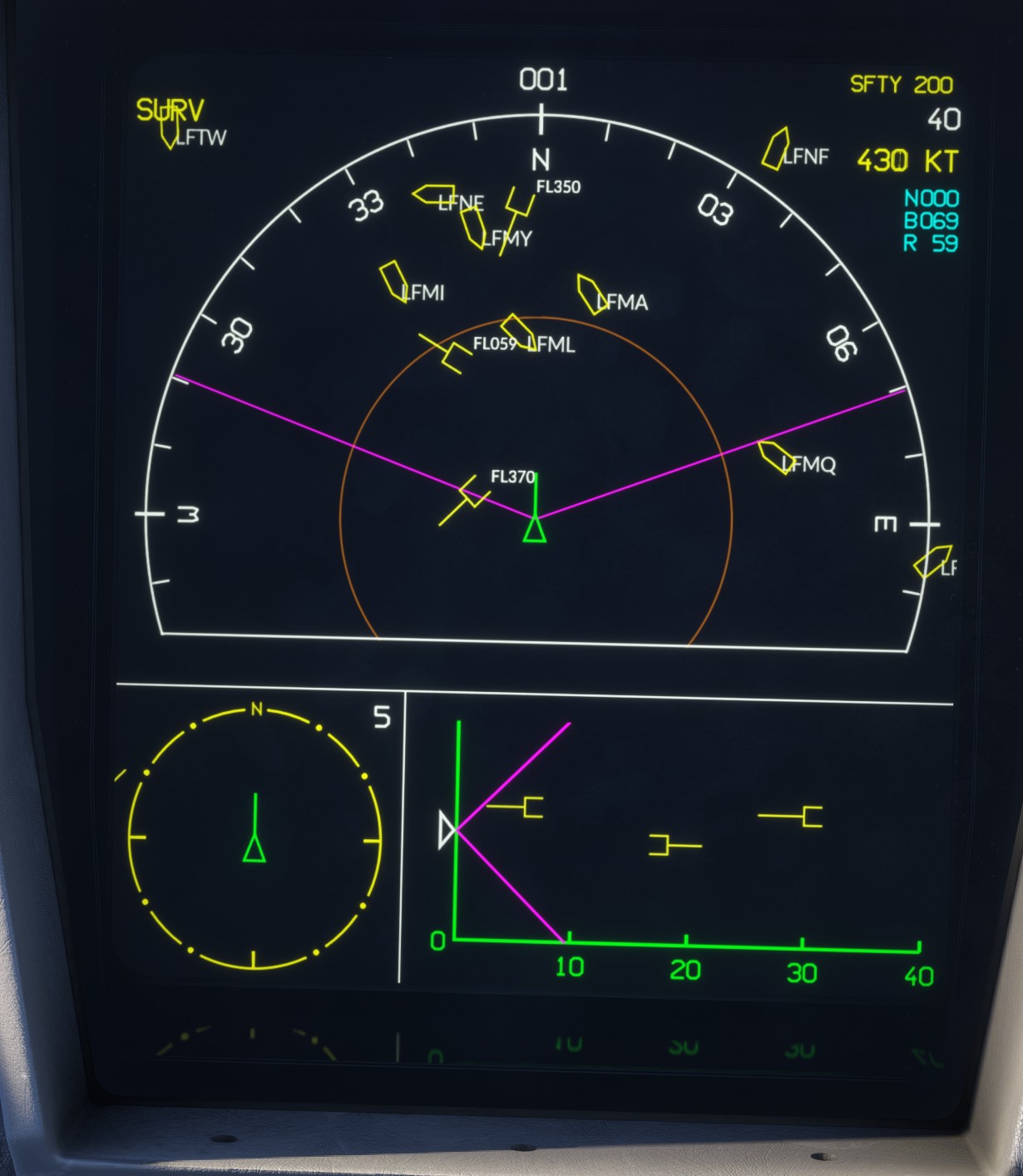
When an aircraft leaves the radar detection volume, its position continues to be estimated for a few seconds before the track disappears from the display.
Traffic may occasionally disappear or flicker on the center display. This is caused by a simulator issue that can make AI traffic unstable. Using traffic injected through the custom spawner avoids this issue.
Front sector optronics
The Rafale is equipped with a front sector optronics (FSO) system integrated above the nose. It combines visible-spectrum and infrared optronic channels for passive detection, identification and tracking.
Both IRST and IMA must be selected on the LD SYS page to use these functions.
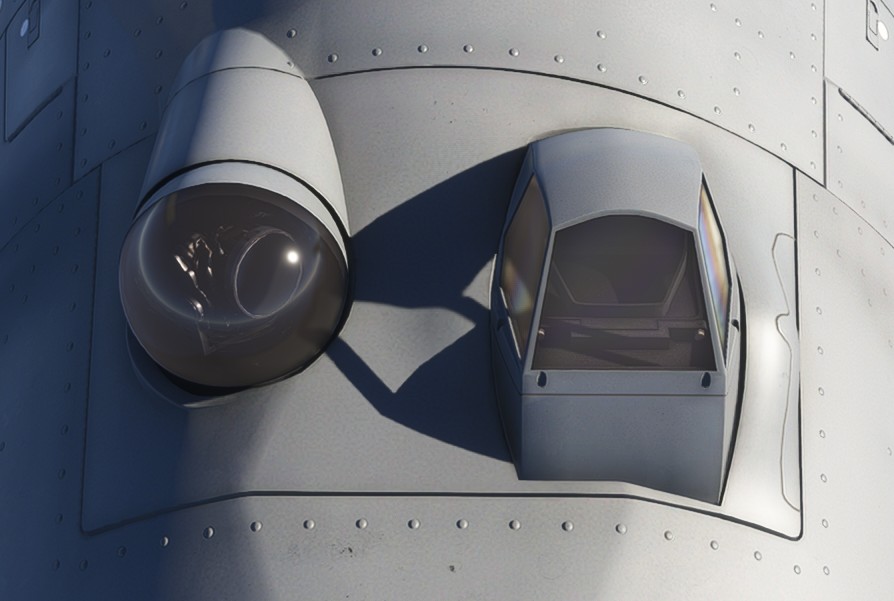
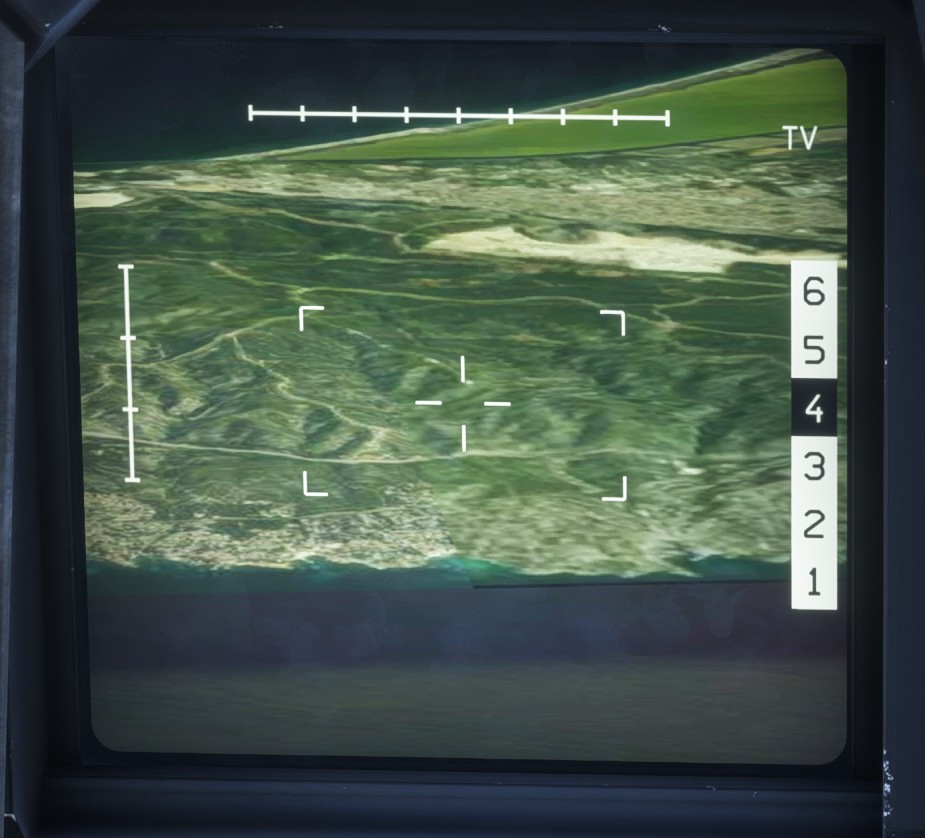
The system can be used to track a designated air or surface target and display infrared or TV imagery on the LD IMA page.
When not in use, the FSO optical heads are stowed in a protected position.
Targeting pod
The Damocles targeting pod implemented in our Rafale extends the aircraft's electro-optical targeting capabilities. It provides imagery and laser designation for surface targets across a wide field of regard beneath the aircraft.
The pod's head rotates according to the aircraft's movement and the position of the designated target in order to maintain its line of sight.