Hydraulic system
The hydraulic system is designed for redundancy and consists of two independent circuits operating in parallel.
This section describes the aircraft systems powered or assisted by hydraulic pressure.
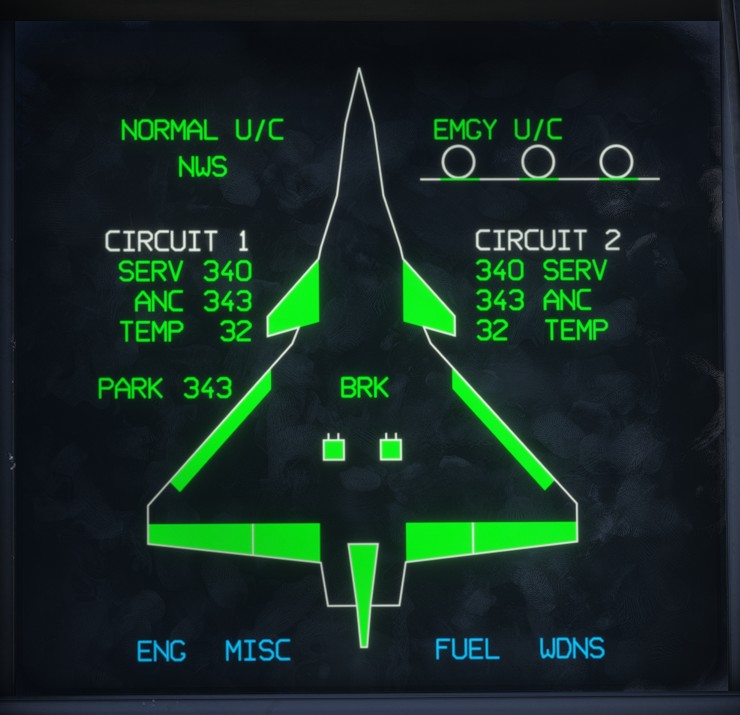
The hydraulic system can be monitored at any time on the LD HYD page.
Description
Each hydraulic circuit is associated with one engine: the left circuit is powered by the left engine, while the right circuit is powered by the right engine.
The main hydraulic consumers are supplied by both circuits to maintain partial or full operation if one circuit fails. These include:
- The landing gear and nosewheel steering.
- The wheel brakes.
- The elevons.
- The canards.
- The rudder.
- The leading-edge slats.
Hydraulic pressure is generated by two engine-driven pumps, one connected to each engine. Under normal operating conditions, each circuit provides approximately 350 bar of pressure.
Hydraulic power becomes available as soon as at least one engine is running. During the engine-start sequence, the elevons and canards can be seen moving to their neutral positions as hydraulic pressure builds up.
Consumers
Flight control surfaces
The flight control surfaces can be actuated as long as sufficient hydraulic pressure is available.
The four elevons, both canards, the rudder and the leading-edge slats are controlled by the FBW system, based on pilot inputs, aircraft configuration and current flight conditions.
Landing gear
The Rafale is equipped with a hydraulically operated tricycle landing gear.
The landing gear is extended and retracted using the landing gear handle. Its current position and locking state are shown by the associated indicator.
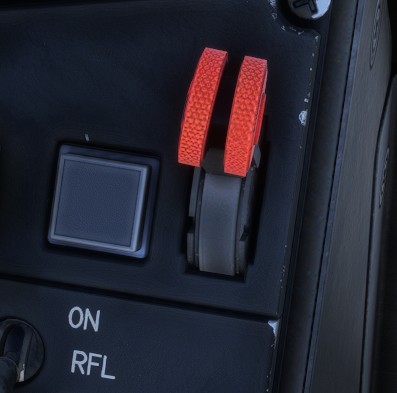
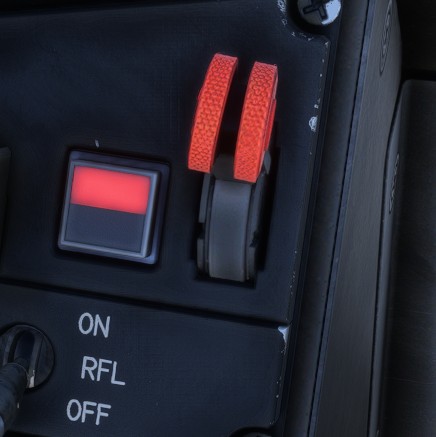
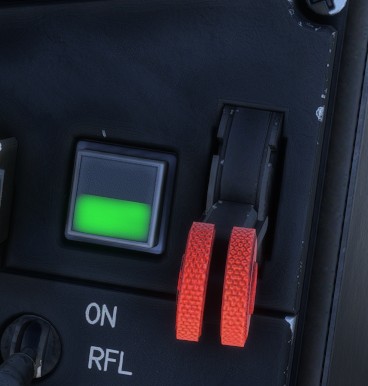
Extending the landing gear automatically enters the aircraft into APP mode.
The landing gear does not have a maximum extending speed, however excessive aerodynamic loads may damage it. The landing gear should therefore only be operated within its normal speed range.
Airbrake
The aircraft uses an airbrake system to increase drag and decelerate more rapidly in flight.
Unlike most aircraft, the Rafale does not use dedicated airbrake panels or spoilers. Instead, the elevons are deflected in opposite directions to generate additional drag. The canards are moved simultaneously to compensate for the resulting pitching moment and minimise changes in aircraft attitude.
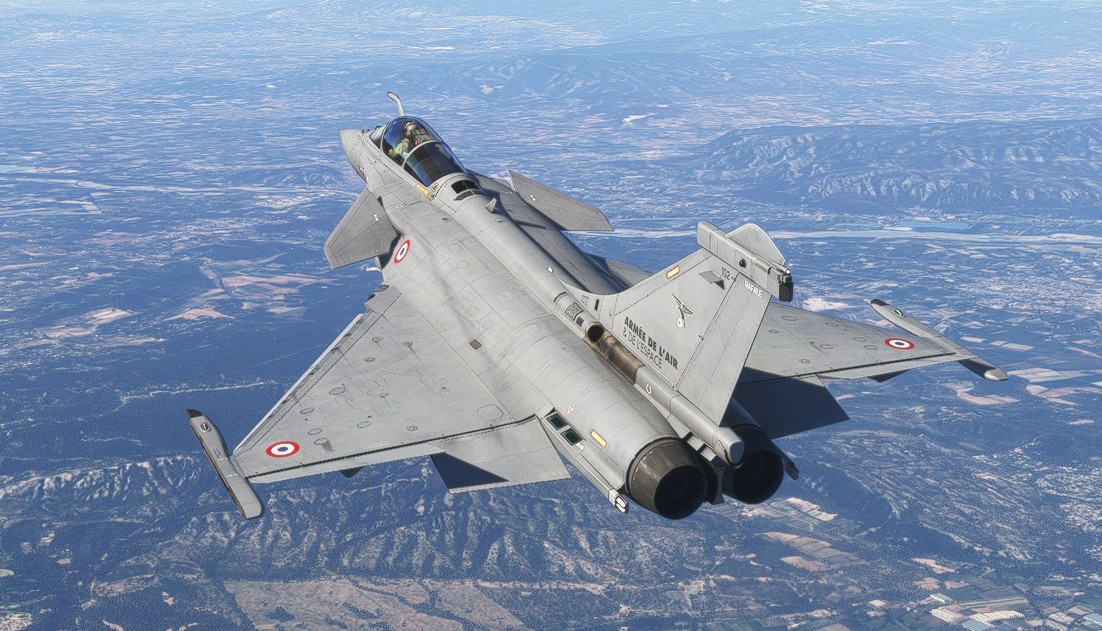
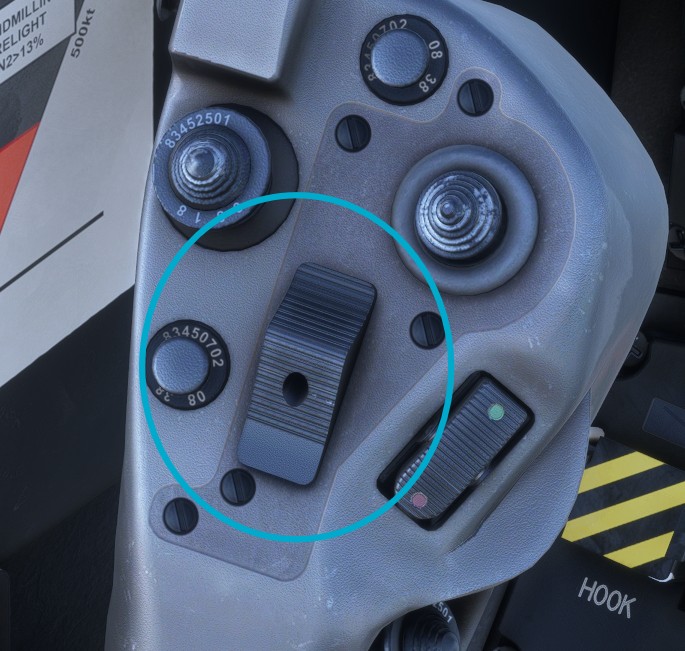
When the landing gear is extended, the airbrake is limited to 50% of its full deflection range.
Slats
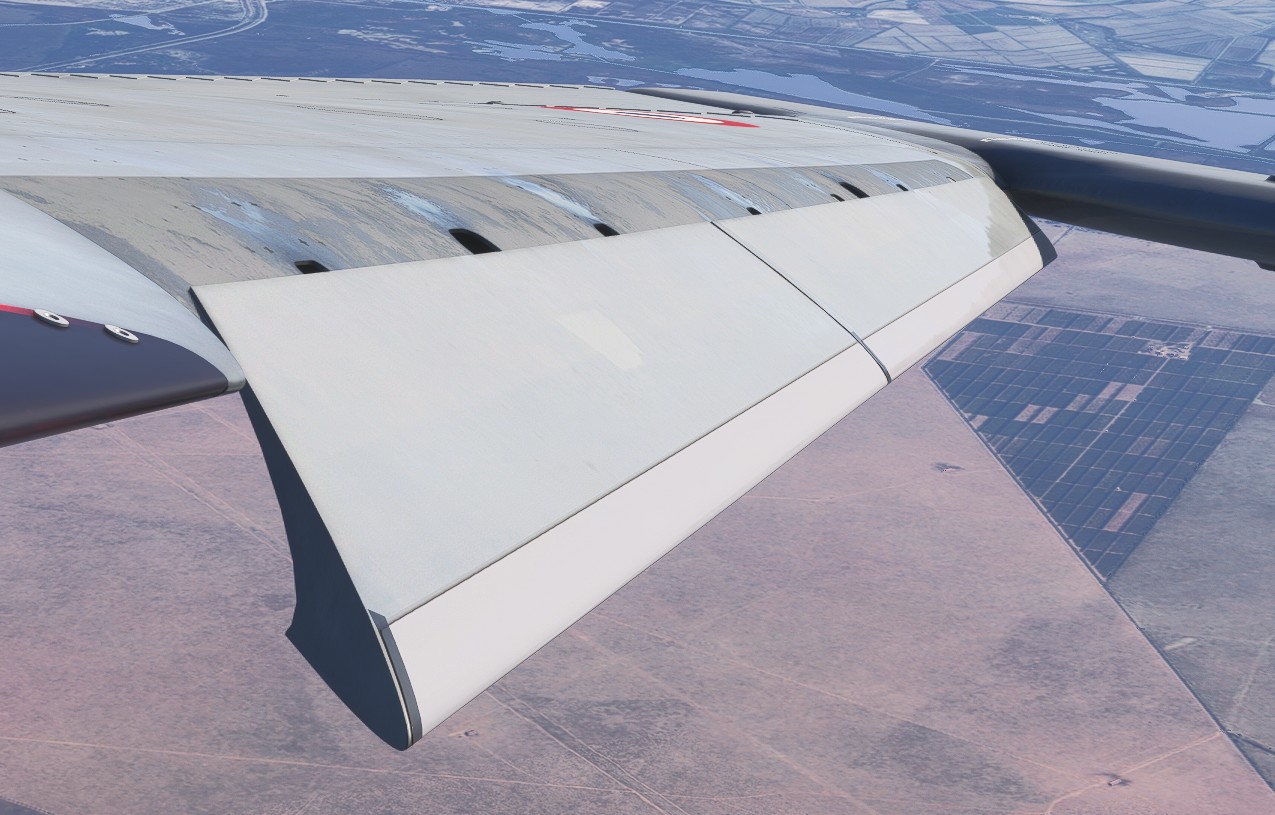
The leading-edge slats increase lift and improve handling at low speed. The aircraft does not have conventional trailing-edge flaps.
Slat operation is fully automatic and is controlled by the FBW system:
-
With the landing gear extended, the slats extend when the angle of attack exceeds 18°.
-
With the landing gear retracted, the slats begin to extend progressively when the angle of attack exceeds 5.5°. Their maximum deflection depends on the aircraft speed.
Brakes
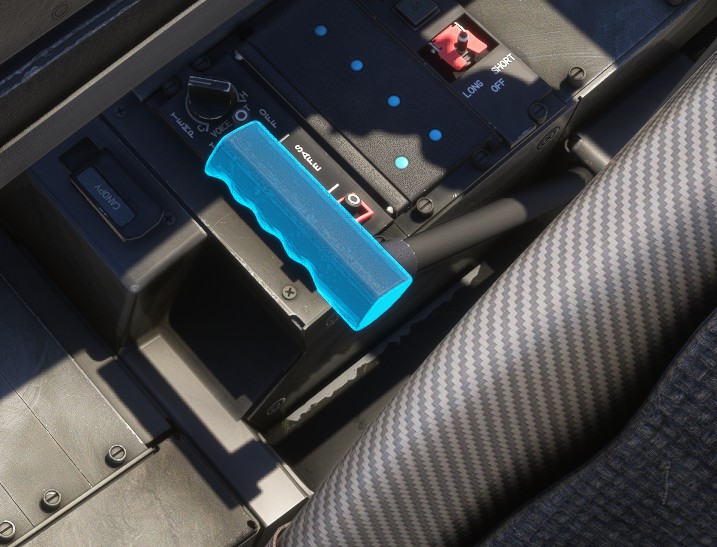
The pilot can apply differential braking using the rudder pedals.
The parking brake can be used to keep the aircraft stationary while parked or during engine start.
Nosewheel steering
The aircraft is equipped with hydraulically assisted nosewheel steering to facilitate ground manoeuvring.
Nosewheel steering can be enabled or disabled using PM8. It is automatically disabled when the indicated airspeed exceeds 60 knots to reduce the risk of excessive steering inputs or loss of directional control during take-off and landing.
An indicator illuminates when nosewheel steering is enabled.
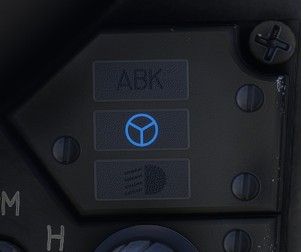
On the real aircraft, nosewheel steering is disabled by default when the aircraft is started. This behaviour is not simulated in order to provide a more convenient experience for most users.
Tailhook
Although the Rafale C is not carrier-capable, it is equipped with an arresting hook for emergency landings. The hook can engage arresting cables installed on suitably equipped military runways, particularly in the event of a braking or hydraulic system failure.
The tailhook can be lowered using the corresponding control on the left-hand console.
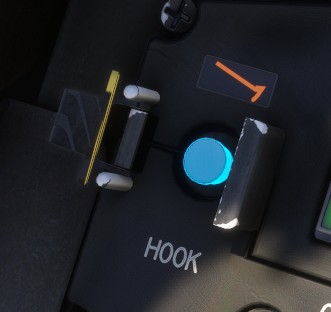
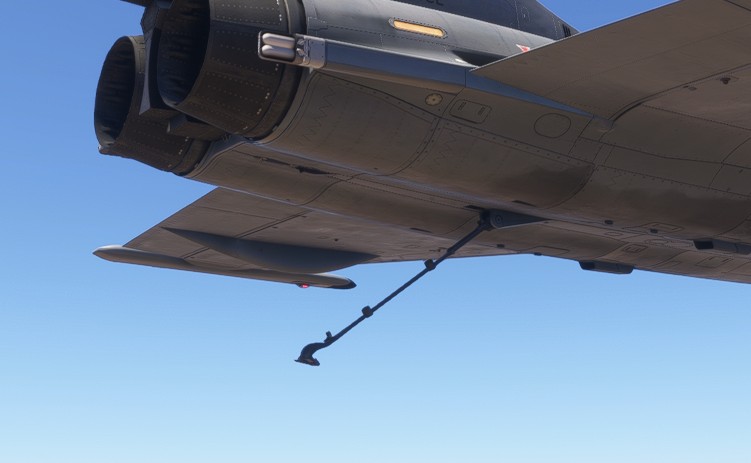
On the real aircraft, the tailhook is lowered by gravity and must be manually reset after landing. For convenience in the simulator, pressing the control again will also raise it.
Failures
The loss of one hydraulic circuit does not normally prevent the aircraft from being controlled, as the main flight control actuators are supplied by both circuits.
However, hydraulic redundancy may be reduced and some systems may operate more slowly or become unavailable, depending on the failed circuit.
The LD HYD page displays the pressure available in each hydraulic circuit.
An alarm is generated when the pressure in one of the circuits falls below its normal operating range.