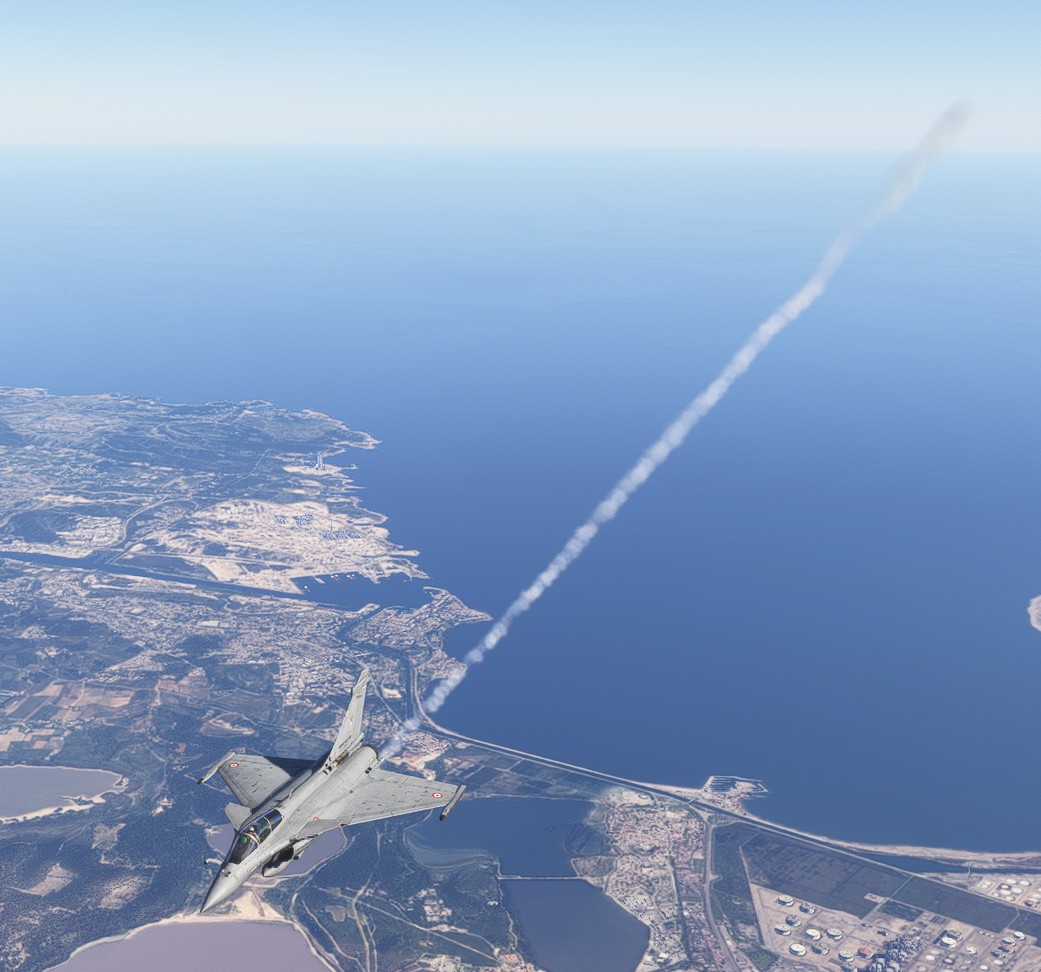
Fuel system
The Rafale fuel system consists of seven internal tanks distributed throughout the fuselage, wings, and vertical stabilizer. Up to three external fuel tanks can also be carried on the aircraft's centerline and inner wing stations.
Fuel system can be monitored at any time in LD FUEL screen.
Circuit description
The left engine is supplied by the left feeder tank, while the right engine is supplied by the right feeder tank.
The APU is supplied through a dedicated fuel line connected to the right-side engine supply circuit. Its fuel consumption is approximately 100 liters per hour.
When fully fueled, the aircraft has approximately 9.5 tonnes of fuel (4.7 internal and 4.8 external).
The following table shows the capacity of each internal tank:
| Tank | Capacity | Fuel weight |
|---|---|---|
| Left feeder | 1,157 L / 306 gal | 928 kg / 2,046 lbs |
| Right feeder | 1,272 L / 336 gal | 1,020 kg / 2,249 lbs |
| Left front | 944 L / 249 gal | 757 kg / 1,669 lbs |
| Right front | 864 L / 228 gal | 693 kg / 1,528 lbs |
| Left wing | 756 L / 200 gal | 606 kg / 1,336 lbs |
| Right wing | 756 L / 200 gal | 606 kg / 1,336 lbs |
| Fin | 140 L / 37 gal | 112 kg / 247 lbs |
| TOTAL INTERNAL | 5,888 L / 1,555 gal | 4,722 kg / 10,410 lbs |
Fuel transfer is fully automatic. The system maintains the feeder tanks at the required level while consuming fuel from the other tanks in a predefined sequence.
Under normal conditions, the tanks are emptied in the following order:
- External wing tanks.
- External centerline tank.
- Internal wing tanks.
- Fin tank.
- Front tanks.
- Feeder tanks.
Pumps
The fuel tanks are automatically pressurized to ensure fuel transfer throughout the system.
Each engine is supplied by a dedicated booster pump. These pumps are controlled automatically and do not normally require pilot intervention.
When the GPU is connected, the fuel pumps are automatically electrically isolated. This does not prevent engine start, as fuel can still reach the engines by gravity and the pumps only provide additional assistance. Their status can be monitored on the LD FUEL page.
Valves
The fuel system includes several valves used to isolate components and control fuel distribution.
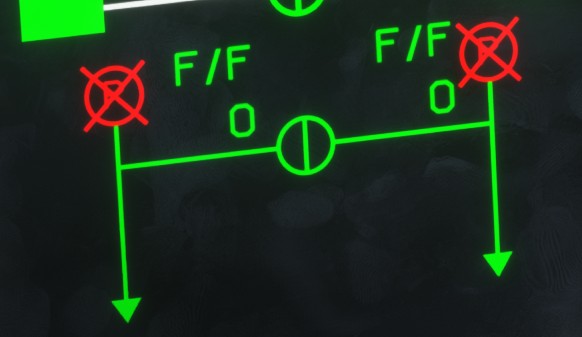
Each engine and the APU has a dedicated fuel shutoff valve. These valves can be manually closed by the pilot in the event of a fire, leak, or other emergency.
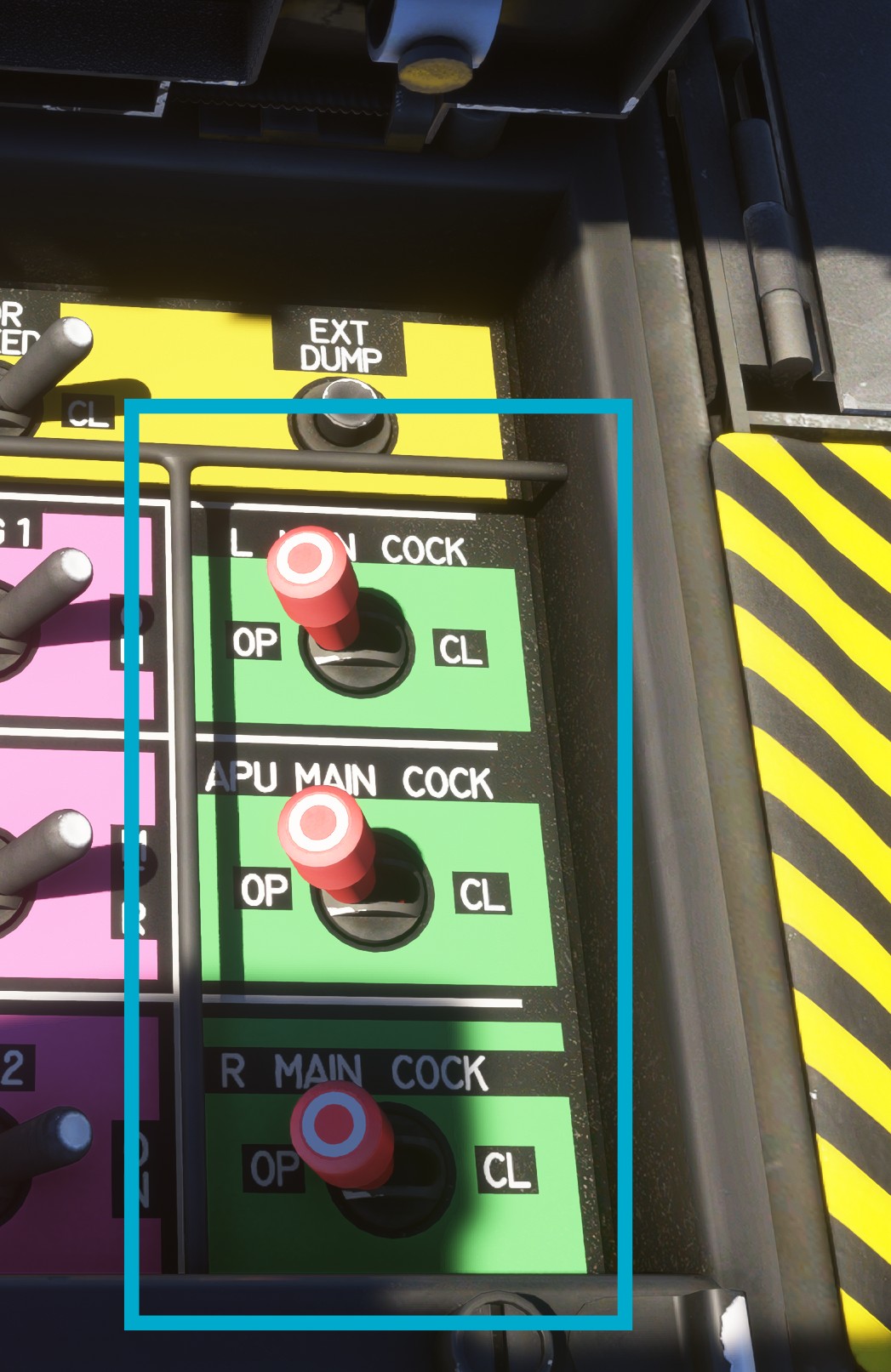
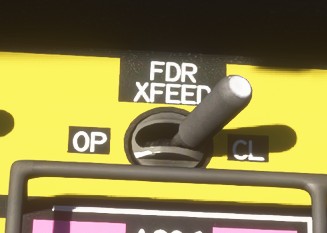
The fuel system is functionally divided into left and right circuits, which do not normally communicate with each other. Two crossfeed valves can be used to connect both sides when required.
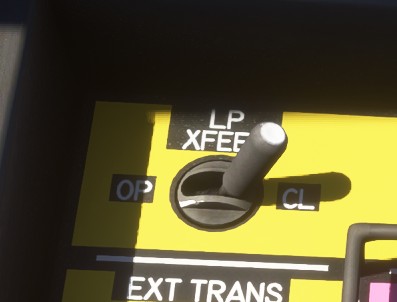
- The low-pressure crossfeed valve connects the left and right low-pressure fuel supply lines upstream of the engines.
- The feeder tank crossfeed valve connects the left and right feeder tanks. It can be used to correct a fuel imbalance or maintain fuel supply following a system failure.
External fuel
The aircraft can carry up to three external fuel tanks: one on the centerline station and two on the inner wing stations.
Two external tank types are available:
-
The RPL 701, commonly referred to as the supersonic tank, carries 1,250 liters of fuel. Its aerodynamic shape allows the aircraft to retain supersonic capability while the tank is installed.
-
The RPL 741 carries 2,000 liters of fuel. When this tank is installed, the aircraft is limited to Mach 0.95.
With three RPL 741 tanks installed, the Rafale C can carry up to 6,000 liters of external fuel, extending drastically its range.
The Rafale airframe can accommodate two additional external fuel tanks on the outer wing stations in certain configurations. These stations are not used for external fuel tanks on the Rafale C.
Fuel monitoring
Fuel totalizer
At the beginning of the flight, the pilot must initialize the fuel totalizer from the LD FUEL page.
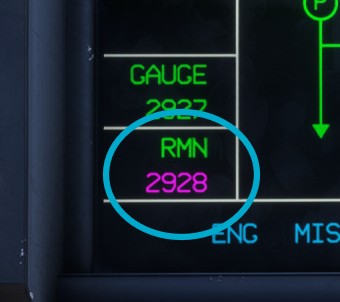
The totalizer calculates the remaining fuel quantity by subtracting the fuel delivered to the engines from the quantity entered during initialization. This calculated value is continuously compared with the fuel quantity measured directly in the aircraft's tanks.
If the difference between the calculated and measured quantities exceeds 300 kg, a fuel discrepancy alarm is triggered. This may indicate an incorrect totalizer initialization, an abnormal fuel transfer, or a possible leak.
For convenience, the EFB includes an option to initialize the fuel totalizer automatically using the current measured fuel quantity.
The fuel system is otherwise managed automatically and does not require specific pilot action during normal operations.
Fuel bingo
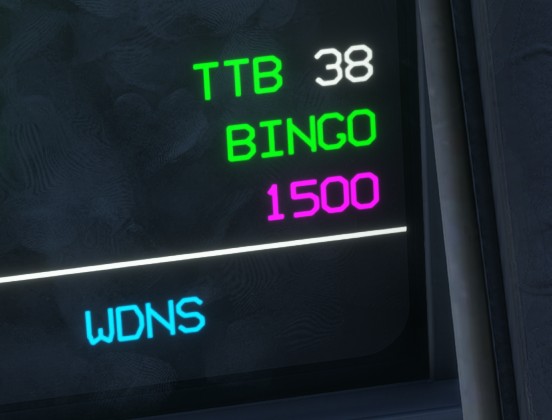
The pilot can set a BINGO fuel value. An alarm is triggered when the total remaining fuel drops below the selected value. The BINGO value can be adjusted from LD FUEL page or directly using the MFK knob.
The time to bingo (TTB) value shows at any time the remaining flight time before reaching BINGO, depending on current fuel consumption.
Low fuel
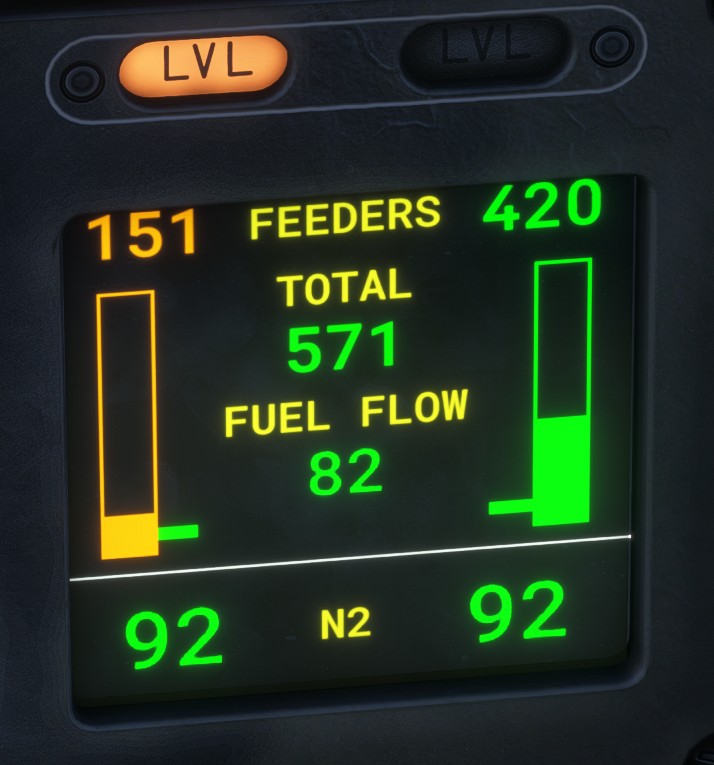
Because the feeder tanks are the last tanks to be consumed, a low feeder quantity indicates that the usable fuel reserve is becoming critically low.
An alarm is triggered when either feeder tank contains less than 250 liters of fuel. When this alarm appears, the pilot should land as soon as operationally practical.
Air-to-air refueling
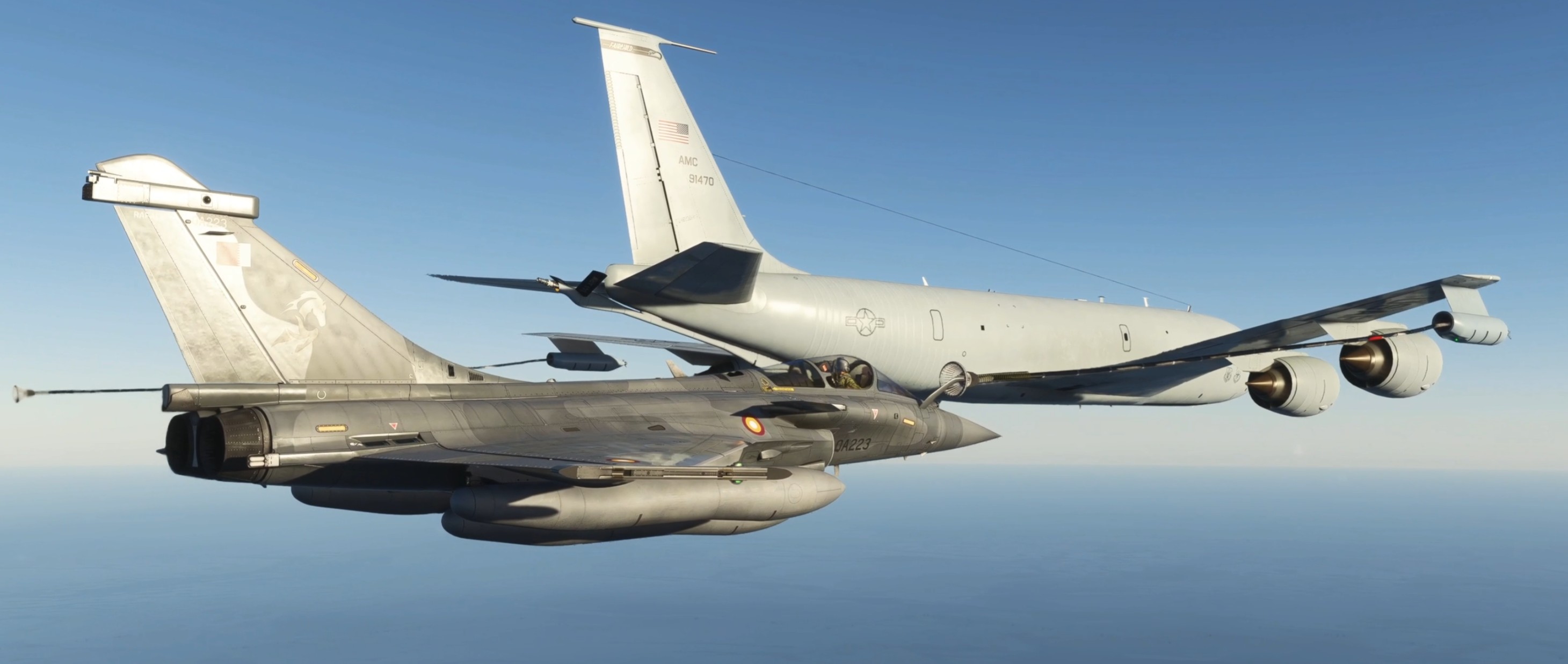
The add-on is compatible with TouchingCloud AirshowAssistant add-on, allowing the aircraft to receive fuel during flight.
To prepare the aircraft for in-flight refueling, set the REFUEL switch to the ON position.
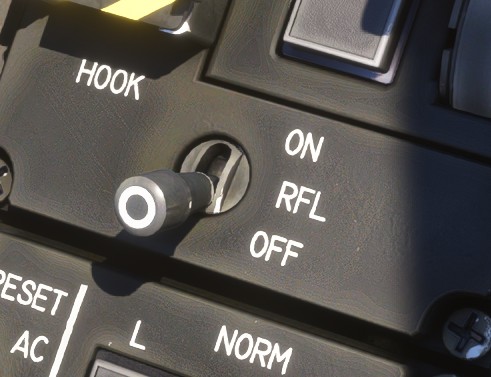
The switch opens the required refueling valves and allows the aircraft to accept fuel from the compatible tanker system.
Fuel jettison
The Rafale C can jettison fuel from its external tanks in an emergency. Fuel is discharged through dedicated jettison valves located beneath each external tank.
Internal fuel cannot be jettisoned on the Rafale C.
To begin the fuel jettison sequence, press the EXT DUMP pushbutton.
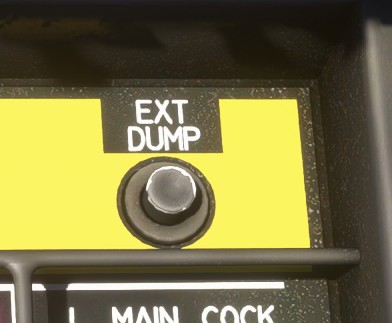
Fuel is jettisoned at an approximate rate of 8 liters per second, meaning a full RPL 741 tank is emptied in just over four minutes.
Once initiated, the fuel jettison sequence cannot be stopped. All remaining external fuel will be discharged.